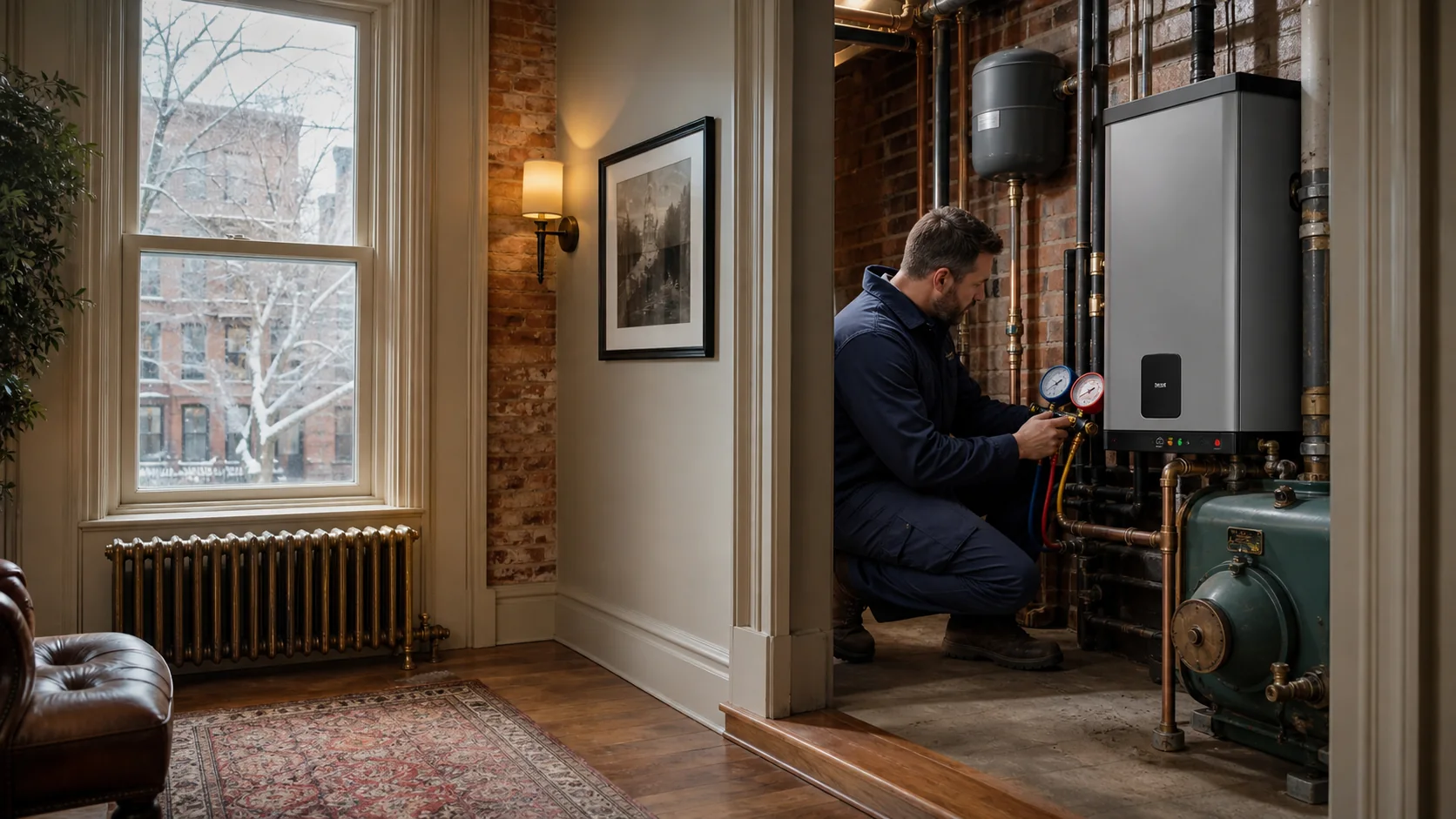
Heating and cooling guidance for Albany homes
HVAC in Albany, NY
Comfort planning for old walls and four real seasons.
Albany's housing stock spans nineteenth-century brick rowhouses in Center Square and Arbor Hill, streetcar-era duplexes in Pine Hills, and the ranch and split-level subdivisions that spread through Colonie and Guilderland after the Empire State Plaza construction boom of the 1960s and '70s. A sound HVAC plan has to account for which era a house belongs to before anyone talks equipment size.
Independent matching resource · No-pressure requestWhole-building comfort
Equipment is one part of the system.
Steam risers and cast-iron radiators are still common in the older wards downtown, while the postwar ranches further out were built around forced-air ducts that have often been resized, rerouted, or partially abandoned over sixty years of renovations. Matching a new system to what's actually behind the walls matters more than matching a brand name.
Read the planning guide →Heating and cooling
Organized around comfort and performance.
Heating Repair
Start from the symptom, not the parts bin: cold rooms, no heat at all, strange noises, or short cycling all point somewhere specific once controls and distribution are checked.
Explore →02Air Conditioning
Cooling in this housing stock usually comes down to duct or line-set condition, how much electrical capacity is actually available, and how much humidity the system has to pull out of the air.
Explore →03Heat Pumps
A heat pump can carry an Albany winter, but only once sizing, backup strategy, and the existing distribution have been worked out for the specific house.
Explore →04Boilers & Furnaces
Swapping a boiler or furnace is a venting and distribution project as much as an equipment purchase, especially in older Capital District housing.
Explore →05Indoor Air Quality
Filtration, ventilation, and humidity control only work as a system; a single gadget bolted onto a leaky duct system rarely solves a whole-house air problem.
Explore →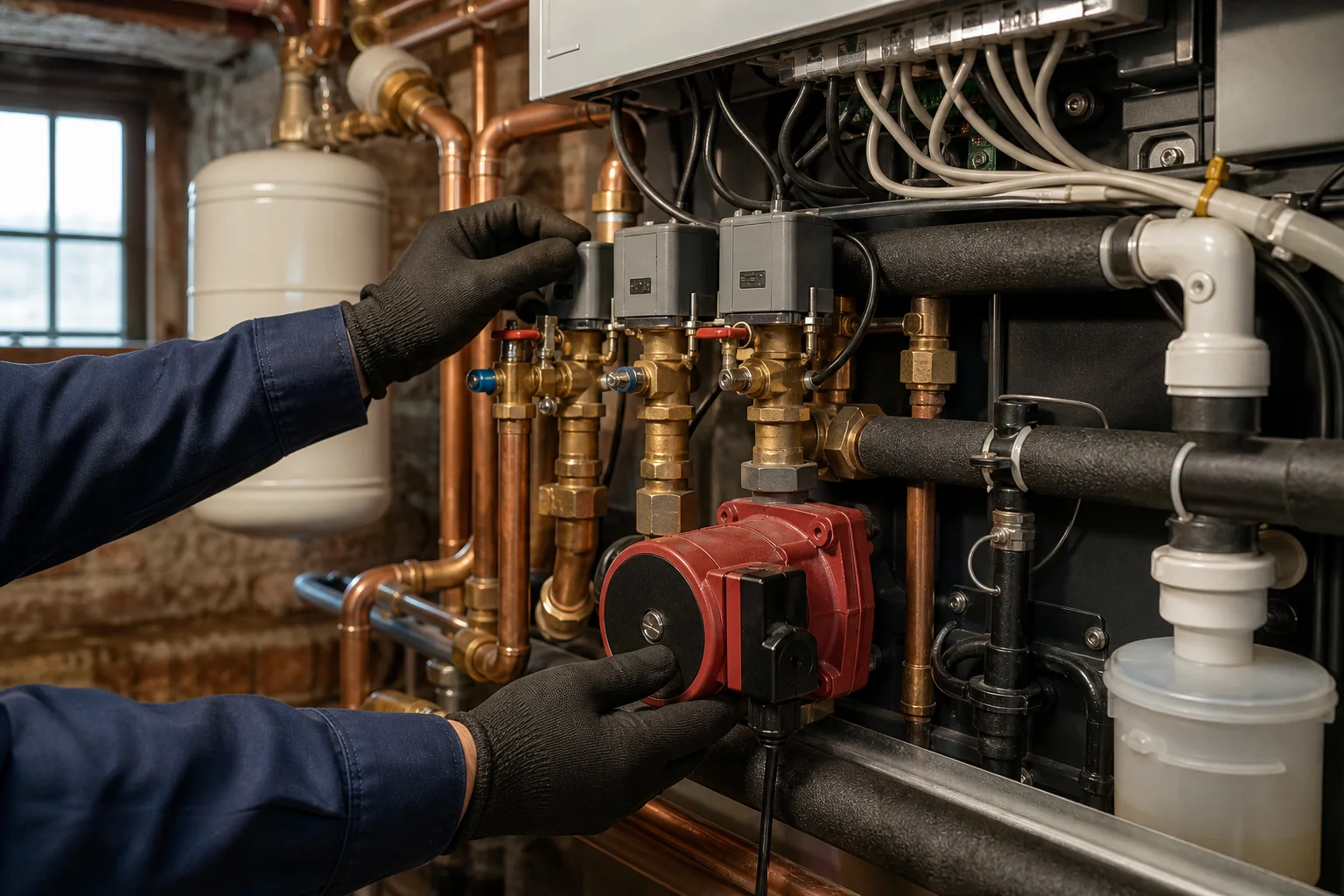
The invisible work
Sizing, distribution, drainage, controls, and commissioning matter.
Sizing the equipment right does not help much if the ductwork is choked, the hydronics are unbalanced, the return air is blocked, or nobody ever measured what the building actually needs.
See a sensible processBuildings change
A rowhouse on Lark Street and a 1975 split-level in Guilderland do not share a single mechanical assumption—different framing, different duct or pipe runs, different attic access, and a different answer for where a heat pump's outdoor unit can even go.
Planning-level context
Price follows capacity, distribution, access, and scope.
Two houses on the same street can land on very different quotes once you factor in electrical panel capacity, how much duct or pipe work is needed, permit requirements, and the condition of the envelope itself.
Open the cost guide →A calmer first step
Describe the comfort problem.
If you smell fuel, hear a carbon-monoxide alarm, see smoke or sparking, get out of the house first and call 911 or the utility—the HVAC conversation can wait.
Questions before the estimate
Are you the HVAC contractor?
No—this site is an independent matching resource that connects homeowners with providers; it does not perform HVAC work itself.
Does old equipment always need replacement?
Not automatically. Whether it's safe, repairable, and still efficient enough matters more than its age alone.
Can I just match the old nameplate size?
Usually not a good idea—renovations since the original install, plus sizing errors from decades ago, mean a fresh load calculation tends to be more reliable.